Flight Training Between Boston and Providence
Flight training between Boston and Providence means learning in an environment that rarely gives you the same lesson twice. At AeroVenture, our home at Mansfield Municipal Airport offers a useful starting point for exploring New England’s weather, varied airspace, and the practical considerations that shape the cost of learning to fly.
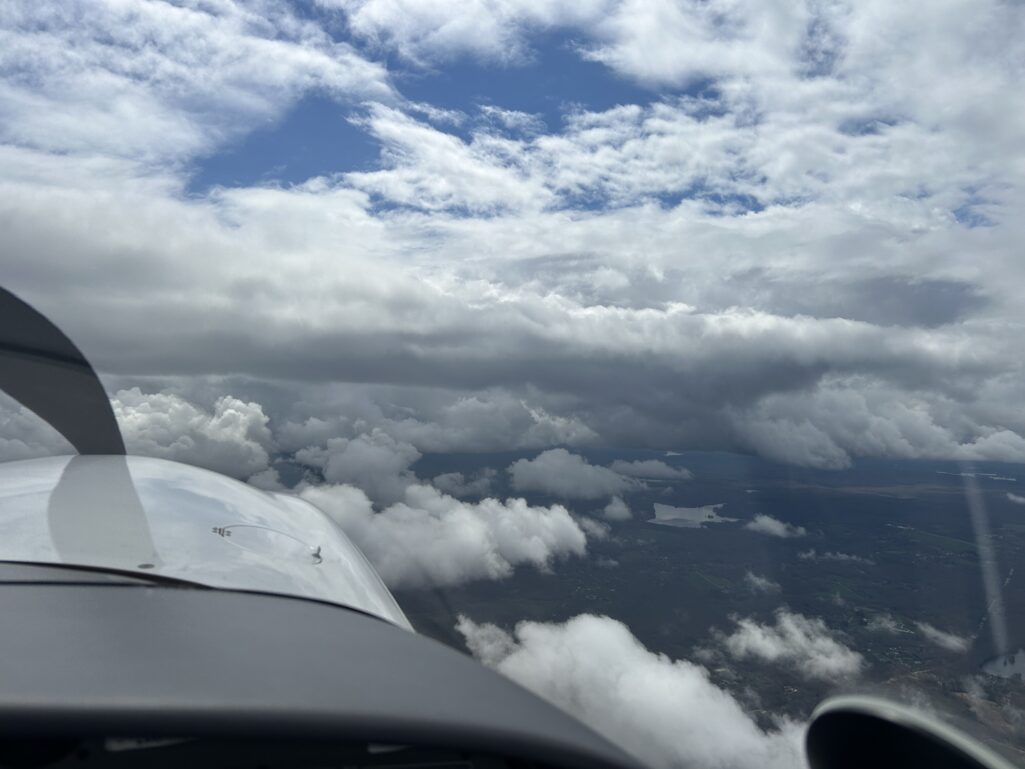
A clear morning may offer smooth air and views stretching from Boston to Narragansett Bay. By afternoon, a sea breeze may shift the winds, coastal clouds may alter a cross-country plan, or traffic flowing into Boston Logan and Rhode Island T. F. Green may turn an ordinary flight into a valuable exercise in communication and decision-making.
That variety is one of the great advantages of flight training in the Boston–Providence area. At AeroVenture, our location at Mansfield Municipal Airport places students between two major metropolitan areas, within reach of busy controlled airspace, quieter practice areas, coastal destinations, and airports of nearly every size and complexity.
The result is a training environment that helps students become adaptable, confident aviators.
How Weather Shapes Flight Training Between Boston and Providence
Weather is more than something pilots check before deciding whether to fly. It shapes nearly every decision we make.
Southern New England experiences four distinct seasons, along with coastal influences that can produce rapidly changing ceilings, visibility, winds, and temperatures. Summer may bring haze, afternoon thunderstorms, sea breezes, and hot, humid conditions that affect aircraft performance. Autumn often offers excellent visibility and crisp flying conditions, but with increasingly strong winds. Winter introduces cold-weather operations, snow, frost, and the importance of understanding icing. Spring can bring low ceilings, rain, and fast-moving weather systems.
These conditions can interrupt a flying schedule, which makes flexibility an important part of training. They also give lessons an opportunity to begin with real aeronautical decision-making.
The National Weather Service’s Aviation Weather Center provides aviation forecasts, observations, and weather graphics that students can learn to interpret with their instructors. Connecting those resources to the day’s planned flight helps turn weather knowledge into practical judgment.
When the weather is unsuitable for a planned flight, training can continue through weather analysis, flight planning, radio practice, aircraft-systems instruction, or preparation for the next stage of the curriculum. A changed plan is not necessarily a lost lesson. Often, it is the lesson.
Safe pilots are defined by more than their ability to manipulate the controls. They must also recognize risk, revise a plan, and decide when conditions exceed their present abilities. New England provides frequent opportunities to develop that judgment from the beginning of training.
Flight Training Between Boston and Providence: The Mansfield Advantage
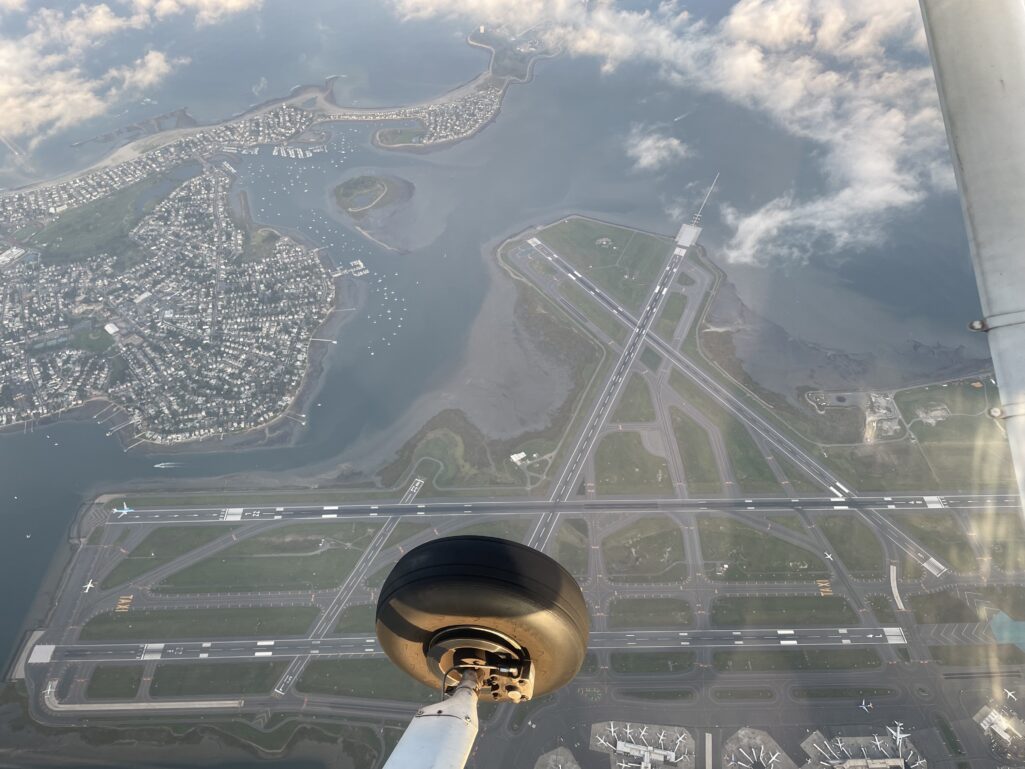
Mansfield Municipal Airport is a non-towered airport located between Boston Logan International Airport and Rhode Island T. F. Green International Airport. That position gives AeroVenture students something especially valuable: access to complexity without requiring every lesson to begin inside it.
At Mansfield, students learn to observe traffic, communicate clearly, and operate responsibly in a non-towered environment. As their skills develop, training expands into nearby controlled airspace, where they gain experience communicating with air traffic control, following clearances, managing traffic sequencing, and operating at towered airports.
Private pilot applicants must gain experience at an airport with an operating control tower, but the educational value extends well beyond satisfying a regulatory requirement. Repeated ATC exposure helps radio calls gradually become useful information instead of an intimidating stream of unfamiliar words.
Nearby airports allow students to experience different runway layouts, traffic patterns, procedures, and levels of activity. Depending on the lesson, a flight might involve controlled airports such as Norwood Memorial, New Bedford Regional, Worcester Regional, or T. F. Green. Cross-country training can reach Cape Cod, the Islands, western Massachusetts, Connecticut, New Hampshire, Maine, and destinations throughout New England.
This variety teaches students to transfer what they have learned. A pilot who trains exclusively in one familiar environment may become very comfortable there. An aviator must be prepared to arrive somewhere unfamiliar and make sound decisions.
Exploring Boston and Providence Airspace at Your Own Pace
It is easy to assume that anyone seeking flight training near Boston should train as close to Boston as possible—or that a Rhode Island student should begin at a large Providence-area airport. But the closest or busiest airport is not always the most effective place to learn.
At a busy towered airport, taxi instructions, ground delays, traffic sequencing, and the distance to a suitable practice area may consume a meaningful part of a lesson. That experience can be educational, but students should consider how much time is spent actively practicing and how much is spent waiting.
AeroVenture’s location at Mansfield allows students to begin at a community airport while progressively gaining experience in the surrounding Boston and Providence airspace. It offers a measured introduction to complexity: enough exposure to build confidence and competence without making every early lesson unnecessarily overwhelming.
For students commuting from southeastern Massachusetts or northern Rhode Island, Mansfield is also accessible from communities such as Attleboro, North Attleborough, Foxborough, Franklin, Wrentham, Sharon, Easton, Norton, Taunton, Cumberland, Lincoln, Pawtucket, and Providence.
Understanding Flight Training Costs Near Boston and Providence
Prospective students often begin by comparing aircraft rental rates. That number matters, but it does not determine the total cost of becoming a pilot.
The complete investment may include aircraft rental, flight and ground instruction, training materials, a headset, an FAA medical examination, knowledge-test fees, examiner expenses, and additional training needed to reach proficiency.
The FAA’s guide to becoming a pilot links to information about certification, training, and testing requirements. The FAA establishes minimum experience requirements, but those minimums are not a promise of how long every student will need. Progress depends on lesson frequency, preparation, weather, scheduling, individual learning needs, and the quality and continuity of instruction.
Consistency is one of the most important variables a student can control. Long gaps between lessons often require time to recover skills that had already begun to develop. A realistic schedule that fits your work, family obligations, and budget is usually more valuable than an ambitious schedule that cannot be sustained.
Preparation also protects the value of every flight. The airplane is an expensive place to encounter an idea for the first time. Thoughtful ground preparation allows more of the flight to be spent applying knowledge, receiving feedback, and building proficiency.
When comparing flight schools near Boston or Providence, ask more than what an airplane costs per hour. Ask how lessons are structured, what the estimate includes, how progress is evaluated, and whether the school can help you create a training rhythm you can realistically maintain.
The Instructor Matters as Much as the Airport
Airspace and weather create learning opportunities, but an instructor determines how those opportunities are used.
A good flight school should explain how each lesson connects to the larger curriculum, how progress will be evaluated, and how training will be adapted to the individual student. You should expect meaningful preparation, clear lesson objectives, and a thoughtful debrief afterward.
AeroVenture is a family-owned flight school built around professional aviation education, scenario-based instruction, and a close-knit team of dedicated instructors. Our objective is greater than helping someone accumulate hours or satisfy the minimum requirements for a certificate. We want our students to develop sound judgment, durable skills, and the confidence to continue learning long after the checkride.
That philosophy has helped AeroVenture earn national recognition, including being named an AOPA National Best Flight School twice and repeatedly ranking among the country’s leading flight schools.
Is New England a Good Place to Learn to Fly?
New England may not offer identical flying conditions every day — and that is part of its value.
Students learn to interpret changing weather, operate near complex airspace, communicate with air traffic control, navigate between closely spaced airports, and make thoughtful decisions when the original plan no longer works. They can experience coastal flying, metropolitan airspace, rural airports, short cross-country trips, and dramatically different seasonal conditions without traveling far from home.
Learning to fly here does more than prepare you to pass a practical test. It prepares you to operate in the real world.
Start Flight Training Between Boston and Providence at AeroVenture
If you are considering flight training between Boston and Providence, AeroVenture offers a personal approach at a community airport. Our family-owned school combines a supportive learning environment with opportunities to explore the wider region as your skills develop.
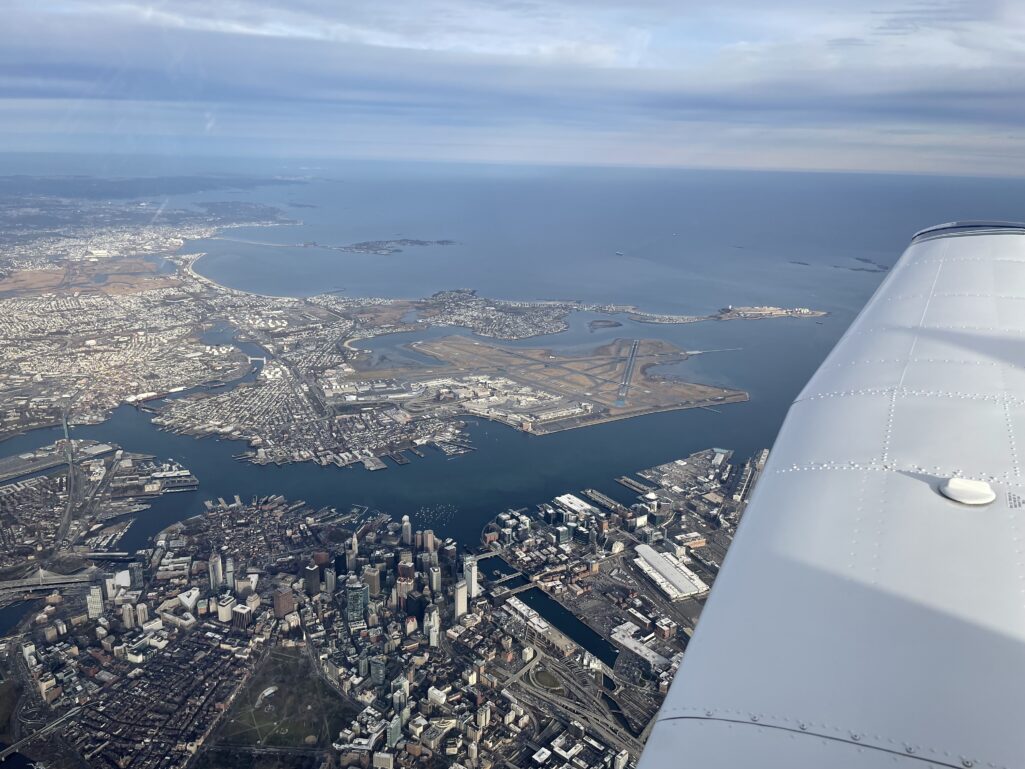
From Mansfield Municipal Airport, the Boston skyline, Rhode Island coastline, Cape Cod, and the rest of New England are within reach. More importantly, each flight becomes an opportunity to develop the judgment, confidence, and mastery required of a safe aviator.
Your first step does not require a long-term commitment. Begin with an introductory flight, meet one of our instructors, and experience the Boston–Providence flying environment from the flight deck.